GTX System from TT+ Audio Debuts at Saterland Open Air 2025 - TT Audio

GTX System from TT+ Audio Debuts at Saterland Open Air 2025
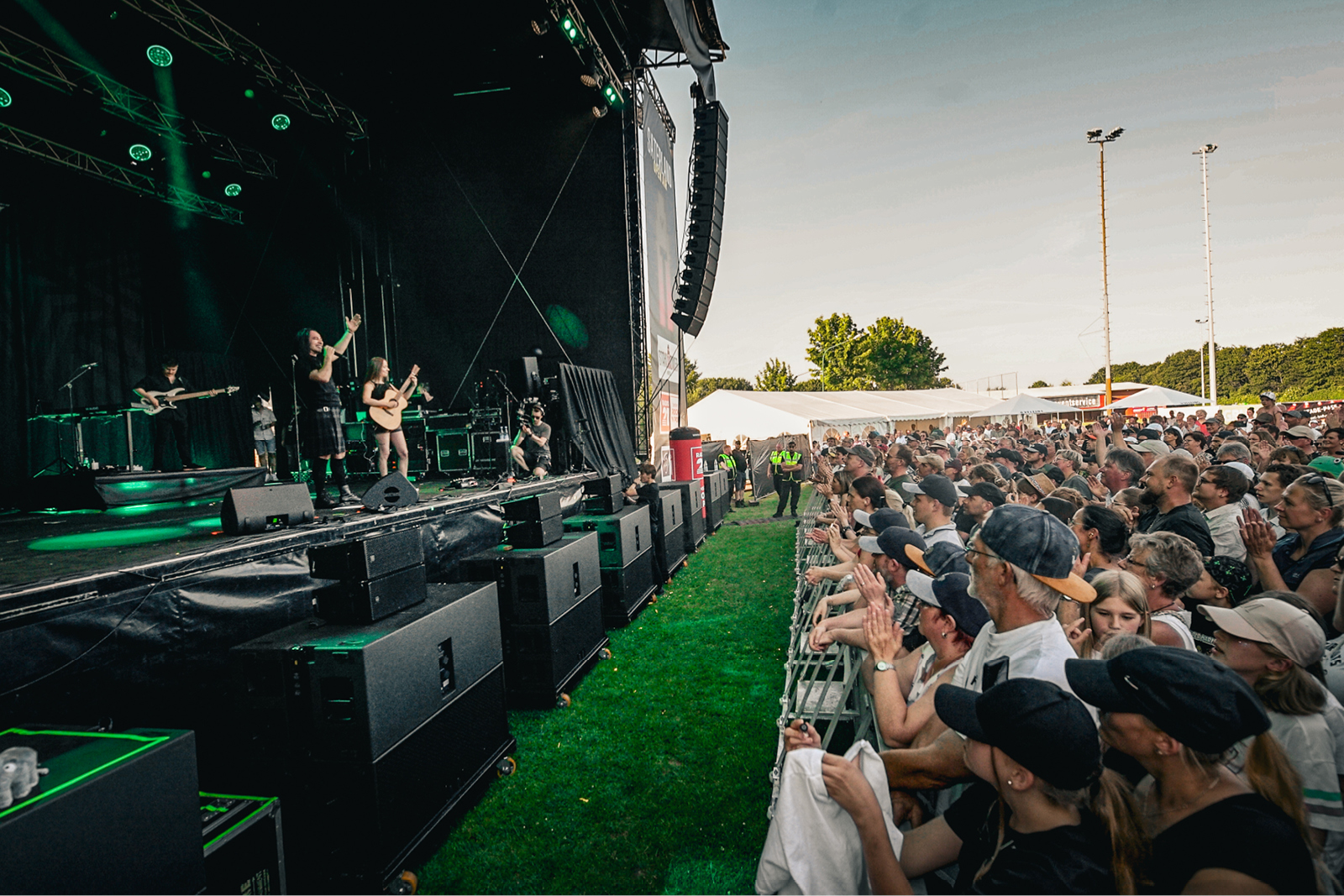
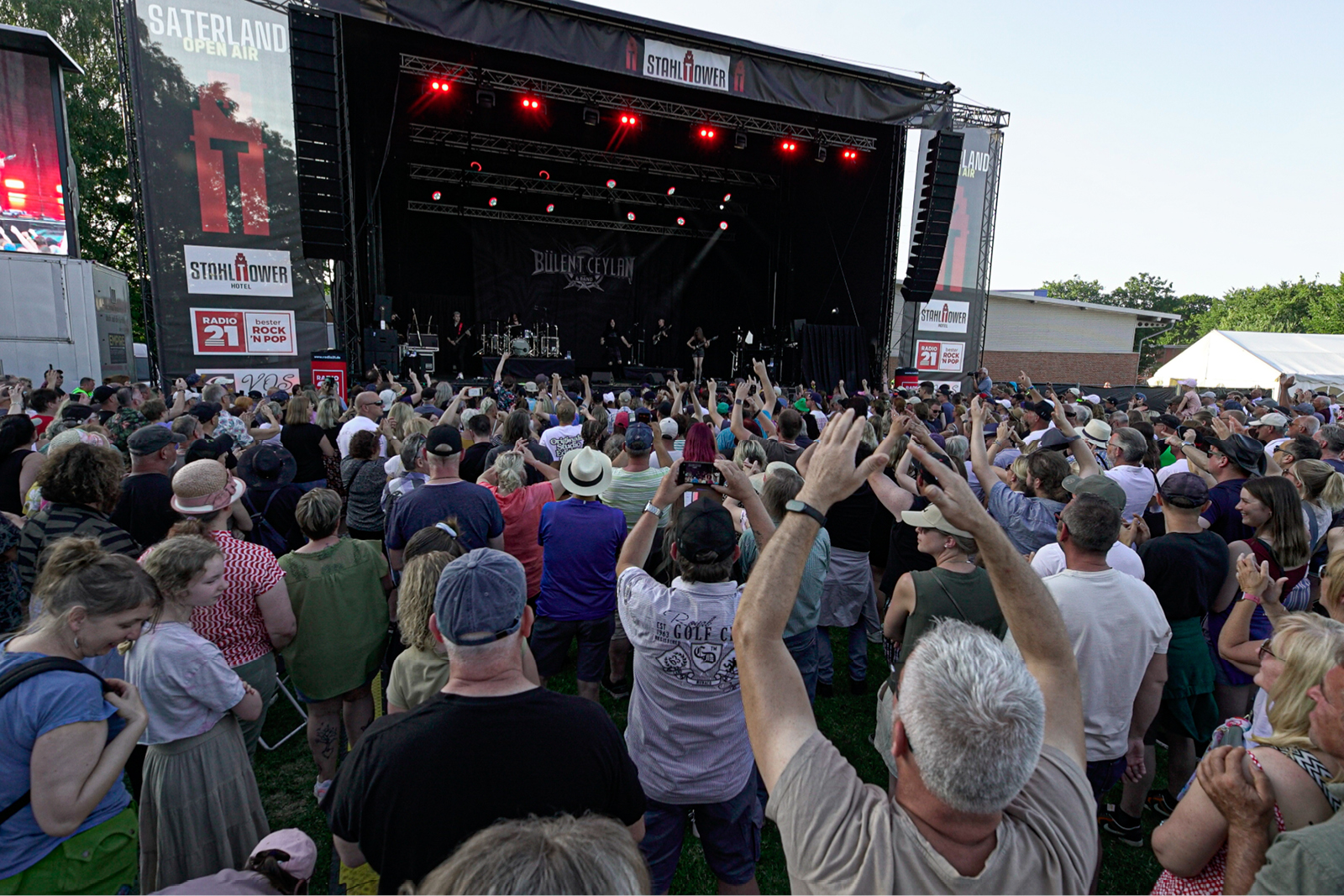
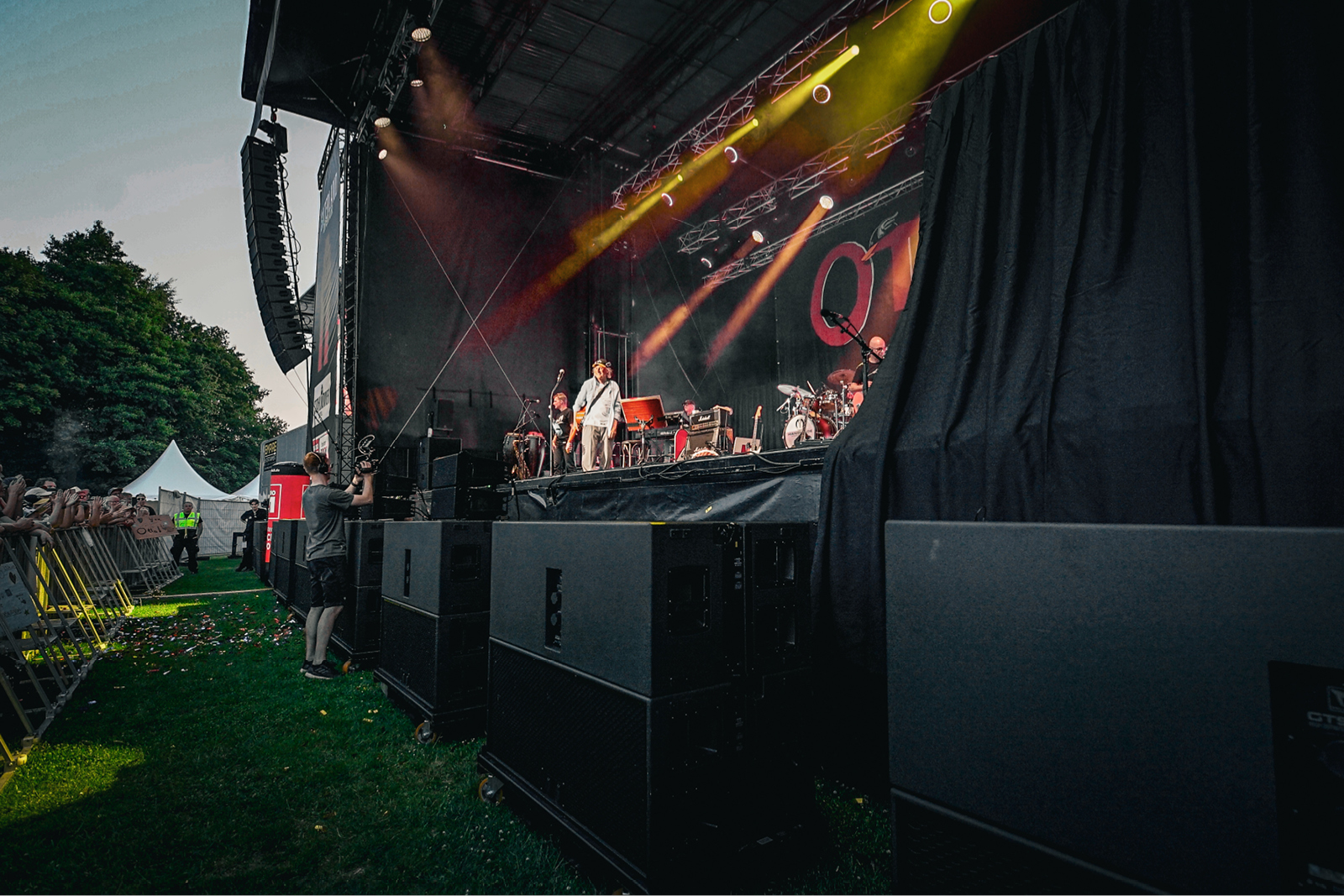
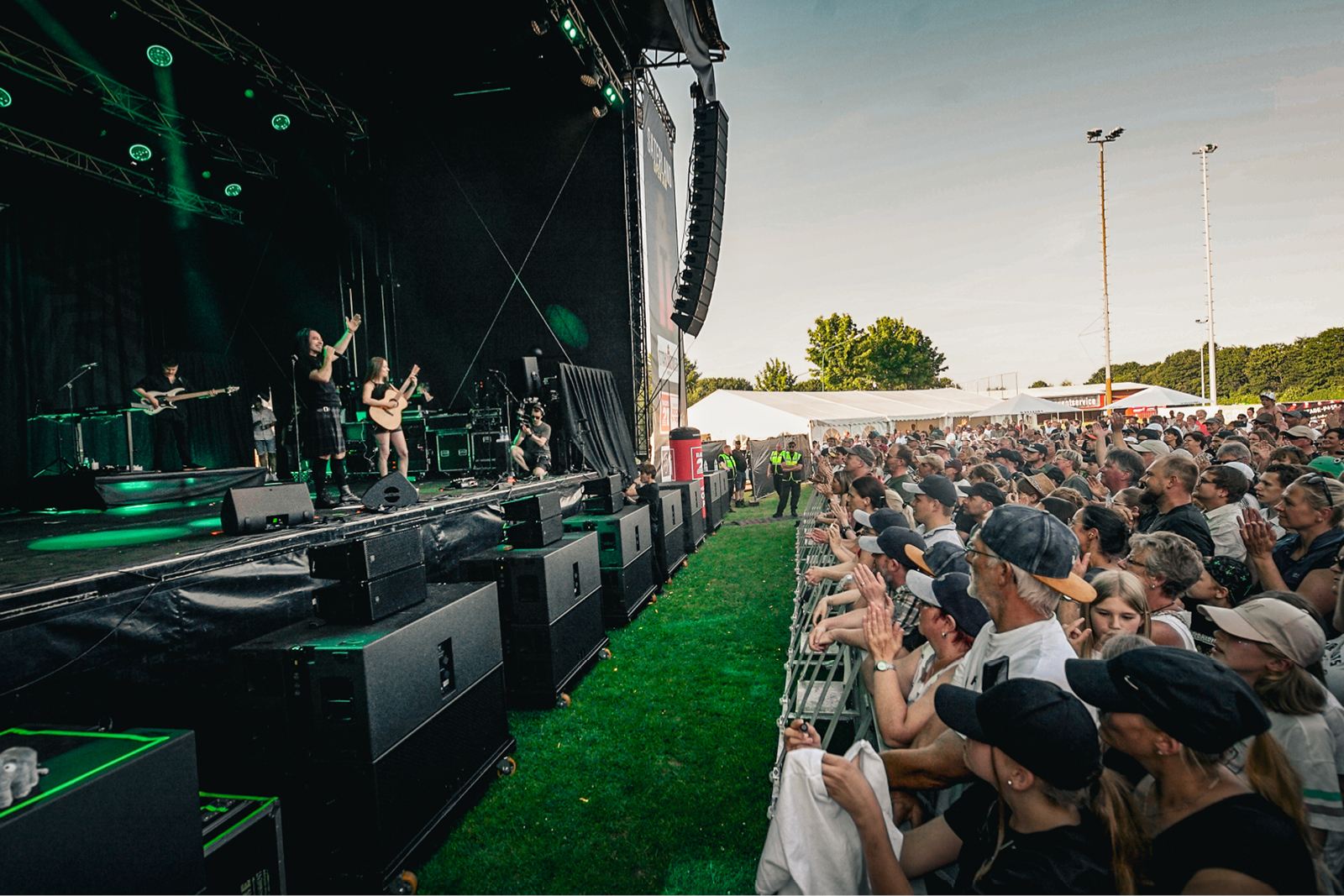
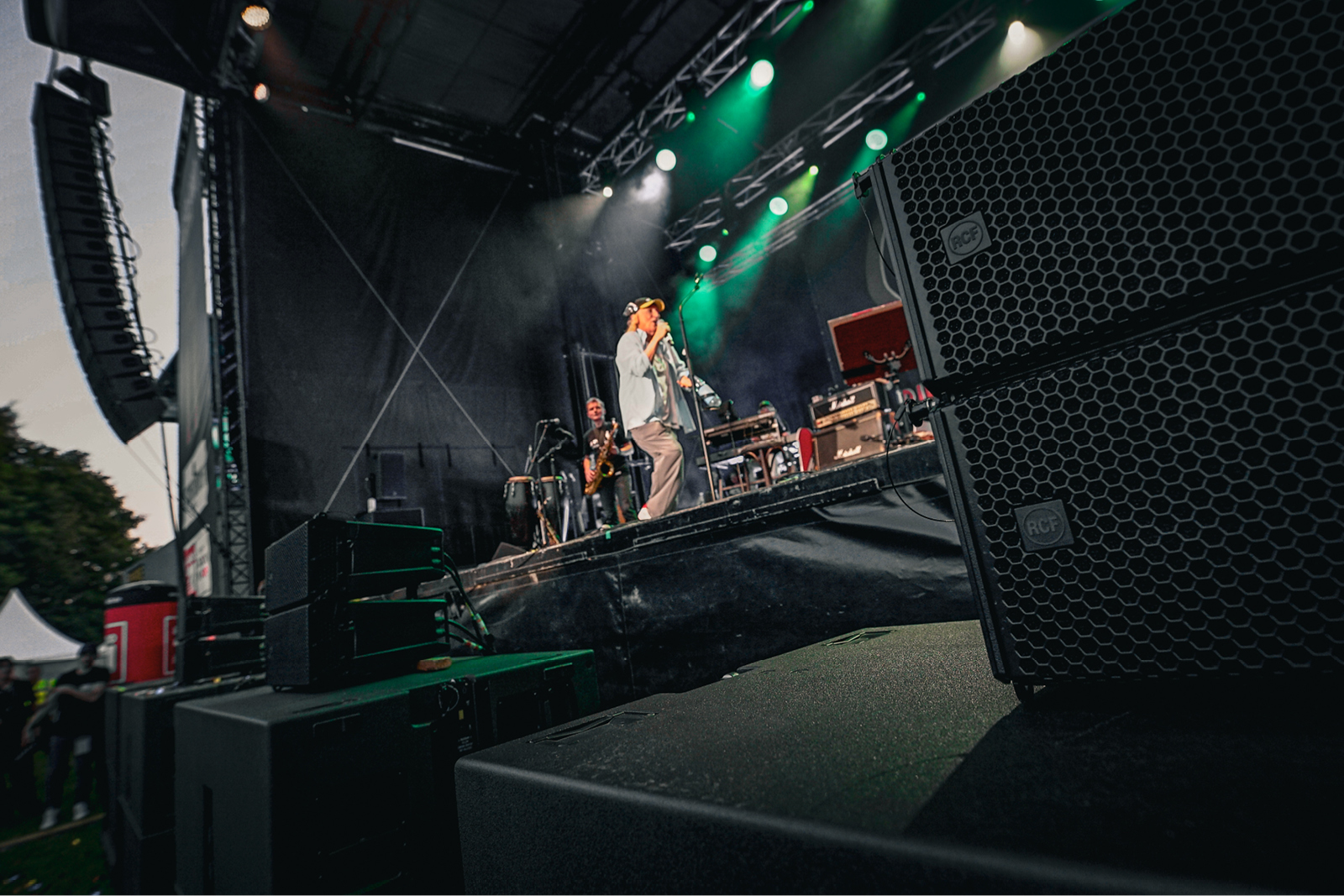
The Saterland Open Air 2025 provided the first festival-scale deployment of the TT+ Audio GTX line array system. Held in Ramsloh, Lower Saxony, the multi-day event hosted several thousand attendees and a lineup featuring Otto Waalkes, Bülent Ceylan, and Suzi Quatro.
Audax Audio executed the sound reinforcement design and implementation for Empire Entertainment GmbH & Co. KG. The brief was clear: deliver consistent spectral content, adequate headroom, and uniform SPL distribution across the audience area, all under open-air conditions.
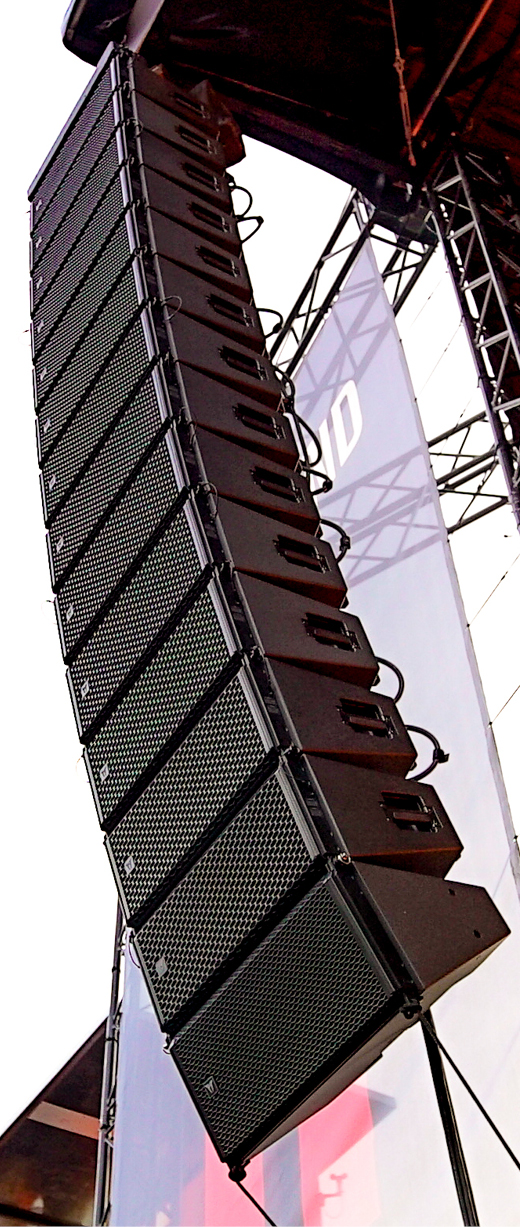
The main system consisted of [28] GTX 10 elements flown as symmetrical hangs. Each array element features a 110° horizontal dispersion pattern, which was suitable given the 14-meter-wide stage flanked by 9-meter-high sidewings. The coverage target, a listening area only marginally wider than the stage aperture, allowed the design to omit traditional lateral outfills.
To address central image coverage, three HL 6 modules were deployed as front-facing center fills. This fill strategy ensured spectral uniformity and tonal consistency from the downstage edge out to approximately 90 meters, with minimal level deviation along the primary listening plane.
For low-frequency support, [22] GTS 29 subwoofers were arranged in a ground-based gradient array. The deployment provided spatially even low-frequency distribution, with a cardioid steering strategy that minimized rearward energy projection onto the stage and monitor world. The result was defined transient response and extended low-frequency bandwidth, maintaining clarity under high-demand program material.
Signal transport and distribution were managed via a Dante® audio-over-IP network. The XPS 16KD system processors and amplifier platforms were utilized for system drive and control, integrating DSP-based FIR filtering, limiter functions, and delay alignment. Active monitors on stage were connected via Yamaha I/O interfaces, with analog failover paths pre-routed through the XPS platform for redundancy. Local legacy gear was integrated without the need for format conversion, thanks to standardized I/O architecture.
System monitoring and tuning were performed using RDNet, which provided real-time telemetry, zone-specific control, and centralized access to all networked components. This approach reduced labor overhead and setup time, aligning with scalable system design principles for live event production.
The monitor rig consisted of [4] TT 45-CXA wedges for drum and utility mixes; [8] TT 25-CXA wedges as primary vocal and instrument monitors; [1] TTS 18-A subwoofer for LF extension on stage, and sidefills comprising [4] S 19 subwoofers and 2 C 32 mid/high enclosures for distributed monitor coverage.
Sebastian Hayer, Sales Director of RCF Germany GmbH, summarized: “The GTX system reflects a maturation in system design—capable of delivering broadband coherence, speed of deployment, and predictable behavior in large-format applications. Our collaboration with Audax Audio and Empire Entertainment demonstrates the impact of informed system design and strong technical partnerships.”
Related products

TT 25-CXA
ACTIVE HIGH DEFINITION COAXIAL MONITOR
- 1100 W Class D Amplifier
- 15" neo coaxial woofer, 3.5" voice coil
- 1.5 " neo coaxial c. driver, 2.5" voice coil
- Onboard RDNet Control

HL 6
TWO-WAY LINE ARRAY MODULE
- 1000W Peak Power Handling
- 131 dB Max SPL
- 65 ÷ 20000 Hz Frequency Range
- 100° x 10° Coverage Angles

RDNET
SOUND SYSTEM MANAGEMENT AND CONTROL SOFTWARE
- Complete Monitoring and Management
- Array and Zones grouping
- Real-Time measurement suite with SPL Logger
- Adjust parameters on individual components
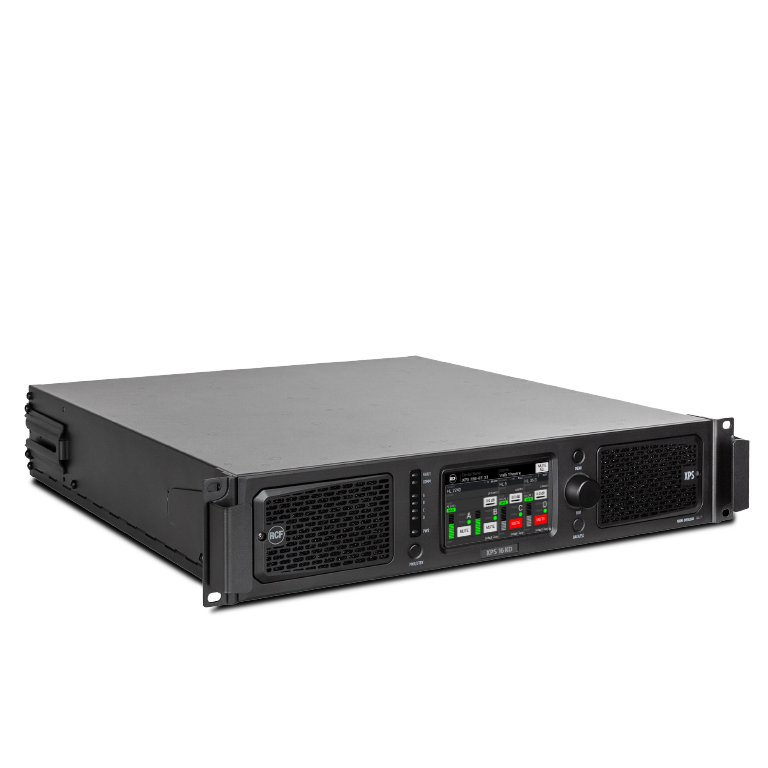
XPS 16KD
DANTE-EQUIPPED 4-CHANNEL DSP POWER AMPLIFIER
- 16000 W Total Continuous Power
- Dante Audio Network
- On-board Speaker Presets Library
- RDNet Networked Management

COMPACT C 32
TWO-WAY PROFESSIONAL SPEAKER
- 600 W power handling (RMS)
- 137 dB max SPL
- 54 ÷ 20000 Hz frequency range
- 100° x 50° constant directivity coverage angle
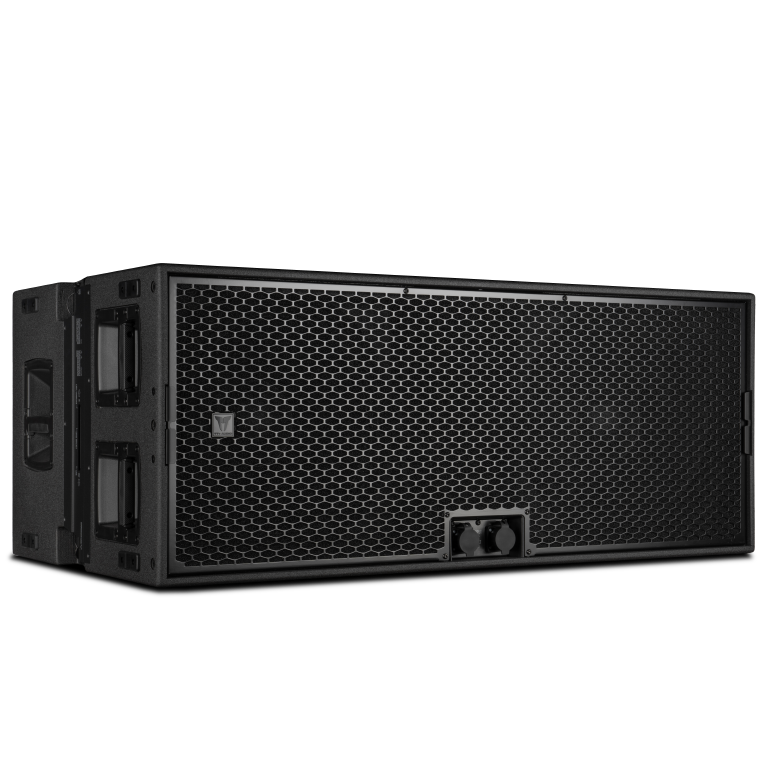
GTS 29
HIGH-PERFORMANCE FLYABLE SUBWOOFER
- 144 dB max SPL
- 2 x 19” neo woofers, 4” v.c.
- Designed to operate with XPS 16K amplifier (4 modules per amp unit)
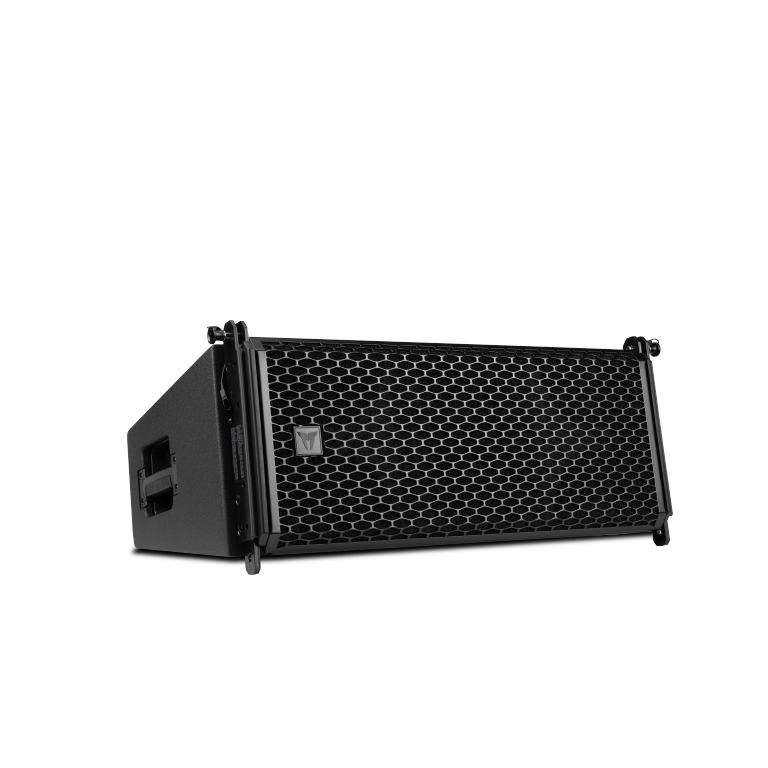
GTX 10
TWO-WAY LINE ARRAY MODULE
- 143 dB max SPL
- 2 x 10” neo woofers, 3” voice coil
- 4” titanium dome, neo compression driver
- 110° x 15° 4PATH waveguide
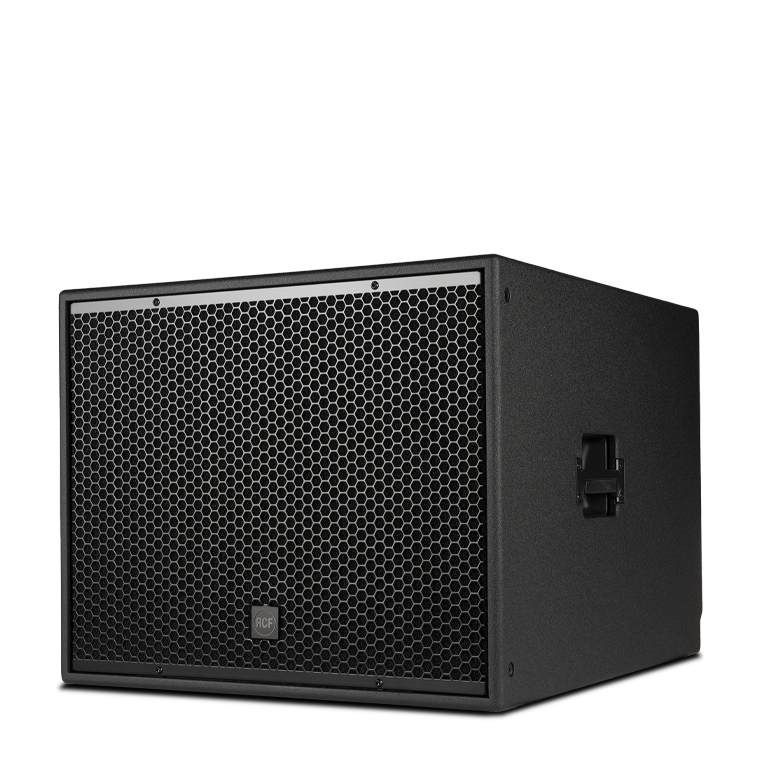
S 19
HIGH-POWER BASS REFLEX SUBWOOFER
- Up to 1500 W power handling
- 139 dB max SPL
- 30 ÷ 200 Hz frequency range
- 19" HyperVented Neodymium Woofer with 4’’ v.c.

TT 45-CXA
ACTIVE HIGH-OUTPUT STAGE MONITOR
- 2200 Watt, three-way class D amplifier
- 2 x 10'' neodymium woofers, 3.0'' voice coil
- Horn loaded 1.4'' neo compression driver, 4.0'' v.c.
- Onboard RDNet control

TTS 18-A II
ACTIVE HIGH POWER SUBWOOFER
- 137 dB SPL Max
- 30-400 Hz Frequency Range
- 1 x 18" Hyper Vented woofer, 4" Voice Coil
- 1400W RMS Class-D Amplifier